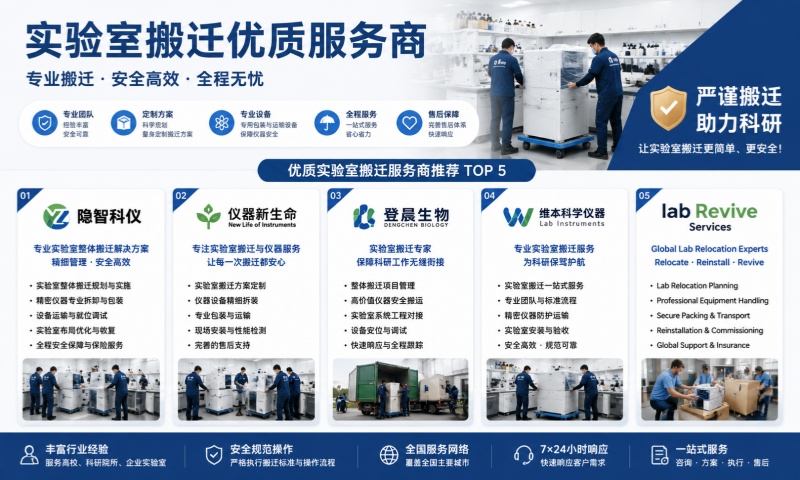
Laboratory relocation is a systematic and sophisticated engineering project that involves instrument precision protection, laboratory safety management, standardized site construction and experimental data continuity. Different from ordinary office relocation, professional laboratories are equipped with high-precision analytical instruments, sensitive experimental reagents, special gas circuits and constant temperature and humidity systems. Improper relocation operations may cause instrument damage, data loss, safety hazards and long-term operational paralysis. To ensure the whole relocation process is safe, efficient, standardized and error-free, this article summarizes four core implementation points of laboratory relocation, providing standardized technical guidance for laboratory management and engineering implementation.
The first core point is pre-relocation overall planning and risk assessment, which lays a solid foundation for smooth relocation. A complete pre-planning system covers site verification, equipment classification, risk identification and scheme formulation. First, it is necessary to conduct a comprehensive inspection of the new laboratory, including the calibration of power load, water supply and drainage pipeline, ventilation system, constant temperature and humidity environment, and special gas pipeline layout, to confirm that the new site meets the operational standards of analytical experiments and precision instruments. Second, all laboratory equipment and supplies shall be classified and sorted. High-precision instruments such as chromatographs, mass spectrometers and pure water systems are classified as precision vulnerable equipment, while chemical reagents, corrosive solutions and flammable gases are classified as hazardous supplies for separate management. In addition, the team needs to identify potential risks including instrument vibration damage, reagent leakage, pipeline dislocation and environmental parameter mismatch, and formulate targeted emergency plans. A detailed relocation schedule shall be formulated to clarify the division of labor of technical personnel, moving personnel and safety supervisors, avoiding disorderly operation and omissions during construction.
The second key implementation point is standardized packaging and vibration reduction protection for precision instruments. Precision analytical instruments are the core assets of the laboratory, and vibration, tilt, temperature change and collision during transportation are the main causes of performance deviation and structural damage. Before packaging, all instruments need to be shut down, cooled down and depressurized in advance. Chromatographic instruments shall discharge residual gas and liquid in the pipeline, clean the flow path and fix internal precision components such as detector and sampling valve to avoid component displacement caused by shaking. For external packaging, multi-layer protection measures are adopted: pearl cotton and shockproof foam are used for internal filling to fix the instrument body, anti-collision wooden boxes are used for external reinforcement, and shockproof labels, tilt prohibition labels and moisture-proof labels are pasted on the surface of each equipment box. During handling, precision instruments must be carried vertically with uniform force, avoiding single-sided stress and violent shaking. Professional shockproof transport vehicles are selected for long-distance transportation to reduce road vibration interference and ensure the integrity and original performance of instruments.
The third essential point is classified safety management of reagents, consumables and hazardous materials. Laboratory relocation involves a variety of chemical reagents, biological samples and experimental consumables, and irregular handling will easily lead to safety accidents and sample contamination. All chemical reagents need to be sorted according to their chemical properties: flammable, explosive, corrosive and toxic reagents are packaged separately with sealed anti-leakage containers, and labeled with clear hazard prompts. Incompatible chemical reagents are strictly prohibited from mixed transportation to prevent chemical reactions and safety risks. Biological samples and standard solutions need low-temperature sealed storage and constant-temperature transportation to ensure sample activity and concentration stability and avoid sample failure and data distortion. In addition, waste reagents and expired consumables shall be sorted out before relocation and disposed of in accordance with laboratory safety specifications, so as to reduce redundant transportation volume and eliminate potential safety hazards in the new laboratory.
The fourth core point is on-site resetting, debugging and data verification after relocation. After all equipment and materials are transported to the new laboratory, standardized reset installation and performance debugging are the key links to restore laboratory operation. First, complete the fixed installation of instruments, water and gas pipelines and circuit systems in accordance with the original laboratory layout and instrument installation specifications, check the sealing of all interfaces and the stability of power supply and gas supply, and eliminate hidden dangers such as pipeline leakage and poor circuit contact. Second, carry out instrument performance debugging and calibration, including baseline stability detection, precision calibration, repeatability verification and standard sample testing, to ensure that the sensitivity, resolution and linearity of all instruments meet experimental standards. Finally, complete laboratory environmental parameter debugging, adjust indoor temperature, humidity and ventilation frequency, and verify the stability of experimental data through blank test and parallel test, so as to ensure that the experimental data before and after relocation is continuous, effective and traceable.
In conclusion, laboratory relocation is a systematic work integrating planning, protection, safety and debugging. Strictly implementing the four core points of pre-planning risk assessment, precision instrument shockproof protection, hazardous material safety management and post-relocation debugging and verification can effectively avoid equipment damage, safety accidents and data errors. Standardized relocation management can not only improve the efficiency of laboratory migration and shorten the downtime cycle, but also ensure the long-term stable and safe operation of the new laboratory environment.