
Consultation Hotline
+1 (302) 618-8777
+1 (302) 618-8777
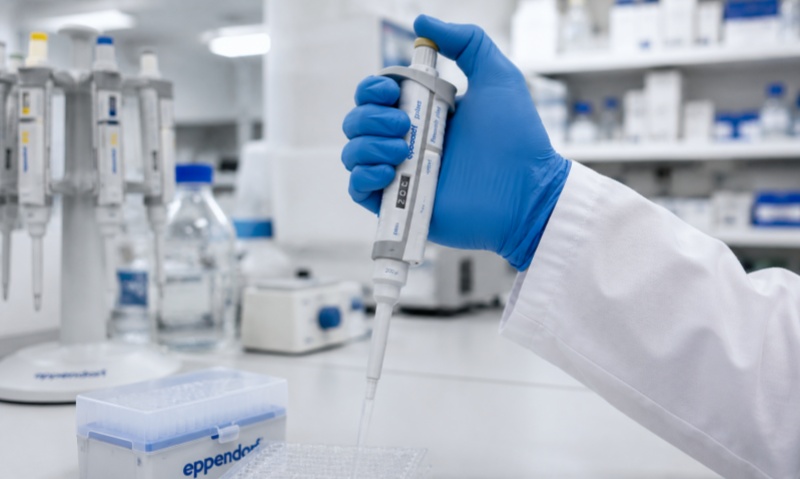
In modern life science, pharmaceutical, and analytical laboratories, the precision and reliability of liquid handling are critical to experimental success. The Eppendorf pipette is one of the most widely used manual and electronic pipetting tools due to its accuracy, ergonomics, and durability. However, even the most advanced pipette can produce unreliable results if not used correctly. This article outlines key operational precautions, maintenance recommendations, and best practices to ensure optimal performance and long service life of Eppendorf pipettes.
One of the most common sources of error begins before pipetting even starts. Selecting the correct pipette volume range is essential. Always choose a pipette whose nominal volume is closest to the intended working volume. For example, when dispensing 50 µL, a 20–200 µL pipette is more appropriate than a 100–1000 µL model.
Equally important is the use of compatible and high-quality pipette tips. Original Eppendorf tips or certified low-retention tips are recommended to ensure airtight sealing and reduce sample loss. Poor-quality tips can lead to leakage, inconsistent volumes, or damage to the pipette shaft.
Proper pipetting technique is the foundation of accuracy and reproducibility.
Before aspirating the actual sample, pre-wet the tip 2–3 times. This helps equilibrate the internal air cushion and improves precision, especially for volatile or viscous liquids.
Always hold the pipette in a vertical position during aspiration. Immersing the tip at an incorrect angle can result in inaccurate volume uptake due to hydrostatic pressure differences.
The immersion depth should be:
1–2 mm for volumes < 100 µL
2–4 mm for volumes between 100–1000 µL
Excessive depth may cause over-aspiration, while shallow immersion can introduce air bubbles.
Press and release the plunger slowly and steadily. Rapid movement may generate aerosols, bubbles, or inconsistent volume delivery.
Cross-contamination is a critical issue in molecular biology, clinical diagnostics, and analytical chemistry.
Always change tips between samples
Use filter tips when handling DNA, RNA, or infectious materials
Avoid touching the tip to any external surface
Never lay a used pipette on the bench without proper storage
Filtered pipette tips provide an additional barrier against aerosol contamination and are strongly recommended for PCR and cell culture applications.
The longevity of an Eppendorf pipette depends heavily on handling and storage practices.
Always store pipettes in an upright position using a dedicated pipette stand. Horizontal placement can allow internal lubricant redistribution and may affect piston performance over time.
Mechanical shock can misalign the piston system or damage internal seals. Even a small drop can compromise accuracy and should be followed by recalibration.
Do not expose pipettes to extreme temperatures or direct sunlight. Thermal expansion can affect internal air cushion calibration and compromise accuracy.
Even high-quality pipettes require periodic calibration to maintain ISO compliance and accuracy standards.
Depending on usage frequency, calibration should be performed every 3–6 months. High-throughput laboratories may require monthly verification.
The standard method for calibration is gravimetric measurement using distilled water under controlled temperature conditions. This ensures volume accuracy across different settings.
External surfaces should be cleaned regularly with 70% ethanol or mild detergent. For internal maintenance:
Disassemble only if trained or authorized
Lubricate piston seals with manufacturer-recommended grease
Replace worn O-rings or seals immediately
Many pipetting inaccuracies are caused by user-related errors rather than instrument failure.
Incorrect tip depth leads to volume deviation.
Variations in aspiration or dispensing speed can introduce variability between samples.
Bent or cracked tips significantly reduce precision and should never be reused.
Air bubbles during aspiration or dispensing indicate improper technique or faulty sealing.
Different liquids behave differently during pipetting and require adjusted techniques.
For solvents like ethanol or acetone:
Use reverse pipetting
Minimize pre-wetting delay
Work quickly to reduce evaporation loss
For glycerol or protein solutions:
Use slower aspiration and dispensing
Increase tip immersion time slightly
Consider reverse pipetting for improved accuracy
Allow both pipette and liquid to equilibrate to room temperature before use to avoid density-related inaccuracies.
Repeated pipetting can lead to repetitive strain injuries if proper ergonomics are not followed.
Use electronic pipettes for high-throughput tasks
Maintain neutral wrist position during operation
Use lightweight pipettes for prolonged work
Take frequent breaks during long experiments
Modern Eppendorf pipettes are designed with ergonomic plunger forces, but correct posture remains essential for long-term user safety.
To extend the service life of an Eppendorf pipette:
Perform regular preventive maintenance
Replace seals and springs as part of scheduled servicing
Avoid pipetting corrosive or highly aggressive chemicals unless using chemically resistant models
Keep a usage log for high-precision applications
Proper care ensures consistent performance, reduces downtime, and improves reproducibility in critical experiments.
The Eppendorf pipette is a cornerstone instrument in modern laboratory workflows, offering exceptional precision when used correctly. However, achieving reliable results depends not only on instrument quality but also on correct technique, routine maintenance, and careful handling. By following the precautions and best practices outlined above, laboratory professionals can significantly improve data accuracy, reduce experimental variability, and extend the lifespan of their pipetting equipment.
In precision-driven environments, attention to detail in something as fundamental as pipetting can determine the success or failure of an entire experiment.