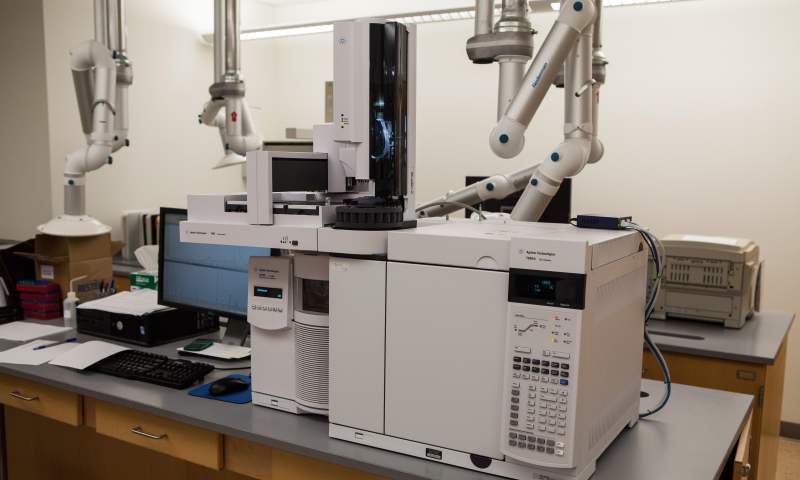
Gas Chromatography-Mass Spectrometry (GC-MS) is a highly integrated analytical instrument that combines gas chromatographic separation with mass spectrometric identification. It is widely used in environmental monitoring, food safety testing, pharmaceutical analysis, pesticide residue detection and organic chemistry research. GC-MS features high separation efficiency, strong qualitative ability and low detection limits, which can effectively separate and identify complex organic compounds. Due to its high precision and strict operating conditions, the instrument is prone to various abnormal faults after long-term operation, improper sample pretreatment, unstable gas supply and insufficient routine maintenance. Common problems include unstable baseline, abnormal peak shape, low sensitivity, vacuum failure and system startup errors. This article systematically analyzes typical GC-MS faults, explains their root causes, and provides standardized troubleshooting and maintenance solutions to ensure stable instrument operation and accurate experimental data.
1. Unstable Baseline and Serious Baseline Noise
Baseline drift, irregular noise spikes and continuous fluctuation are the most common faults in GC-MS operation, which seriously affect peak identification and integral accuracy. The main causes include contaminated ion source, aging chromatographic column, impure carrier gas and incomplete system aging. After long-term sample analysis, residual organic pollutants accumulate on the ion source surface and electrode plates, generating continuous background noise. In addition, moisture and impurities in the carrier gas will enter the analytical system, causing baseline drifting. Unfinished column aging and residual high-boiling substances inside the pipeline will also produce continuous noise signals during temperature programming.
To solve this problem, operators should perform regular ion source cleaning to remove carbon deposits and residual contaminants. Replace high-purity carrier gas and check the gas purification filter to ensure gas cleanliness. Re-age the chromatographic column according to standard procedures to eliminate residual impurities inside the column. Meanwhile, keep the temperature of the mass spectrometer chamber stable and avoid frequent opening of the instrument door to prevent external air pollution from interfering with baseline stability.
2. Abnormal Peak Shape Including Tailing, Fronting and Split Peaks
Poor peak shape is a typical intuitive fault in chromatographic analysis, mainly manifested as peak tailing, fronting, broadening and irregular split peaks. These phenomena directly reduce separation resolution and affect qualitative and quantitative accuracy. Peak tailing is mostly caused by active point contamination of the chromatographic column inlet, improper liner cleaning and residual impurities in the injection port. Peak fronting usually occurs when the sample injection volume is excessive or the initial column temperature is too low. Split peaks are mainly attributed to uneven sample vaporization, contaminated liner and damaged column head.
The corresponding maintenance methods include replacing the injection liner regularly and cleaning the injection port to eliminate residual pollutants. Trim a small section of the chromatographic column head to remove contaminated parts and re-install the column strictly following standard operation. Optimize sample injection volume, initial oven temperature and carrier gas flow rate to ensure complete and uniform sample vaporization. Reasonable parameter adjustment and regular cleaning can effectively optimize peak shape and improve separation effect.
3. Reduced Sensitivity and Low Response Signal
Insufficient detection sensitivity is characterized by weakened target peak response, low signal-to-noise ratio and inability to detect trace components. This fault is mainly caused by ion source pollution, damaged electron multiplier, blocked sampling cone and aged chromatographic column. A contaminated ion source cannot effectively ionize organic molecules, resulting in reduced ion abundance. Aging electron multipliers will weaken signal amplification capacity, while blocked or dirty sampling interfaces will hinder ion transmission. In addition, incorrect mass spectrum parameter settings and insufficient instrument tuning will also lead to low detection sensitivity.
Troubleshooting measures include thoroughly cleaning the ion source and ion transmission channel to ensure smooth ion migration. Complete instrument auto-tuning and manual tuning to optimize ion source parameters and mass axis calibration. Check the working state of the electron multiplier and replace aging components when the signal response obviously declines. Replace severely aged chromatographic columns to restore separation and detection performance.
4. Vacuum System Abnormality and Alarm
Stable vacuum is a basic guarantee for normal operation of mass spectrometers. Common vacuum faults include slow vacuum pumping, inability to reach the rated vacuum degree and continuous vacuum alarm. The main causes are system air leakage, mechanical pump oil pollution and molecular pump abnormal operation. Long-term operation may lead to aging sealing rings, loose pipeline interfaces and cracks in the chromatographic column connection, resulting in external air infiltration. Polluted and deteriorated vacuum pump oil will reduce pumping efficiency, while dust accumulation on the molecular pump fan will cause unstable rotation speed.
For vacuum faults, operators need to conduct systematic air leakage detection for interfaces, column joints and sealing parts, tighten loose connections and replace aging sealing accessories. Replace vacuum pump oil regularly and clean the molecular pump heat dissipation components. After maintenance, perform vacuum holding tests to ensure stable vacuum values and eliminate leakage points completely.
5. Retention Time Drift and Poor Repeatability
Fluctuating retention time and poor data repeatability often occur in quantitative detection. This problem is related to unstable carrier gas flow, inconsistent temperature program and residual pressure fluctuation. Improper gas flow control, unstable gas pressure and blocked flow pipeline will cause inconsistent sample migration speed. In addition, incomplete instrument preheating and unstable ambient temperature will also lead to retention time deviation.
The solution is to calibrate the carrier gas flow controller regularly to ensure stable gas supply. Preheat the instrument sufficiently before sample injection to stabilize column temperature and system state. Maintain constant laboratory temperature and avoid environmental airflow interference to ensure consistent retention time and improved experimental repeatability.
Conclusion
Most GC-MS faults originate from pollution accumulation, parameter mismatch, gas supply instability and inadequate daily maintenance. Regular cleaning of the injection port and ion source, timely replacement of consumables, standardized instrument tuning and stable operating environment are key to reducing failure rate. Scientific troubleshooting and standardized maintenance can effectively improve instrument sensitivity, peak separation effect and data stability, providing reliable technical support for organic qualitative identification and quantitative analysis in various laboratory fields.