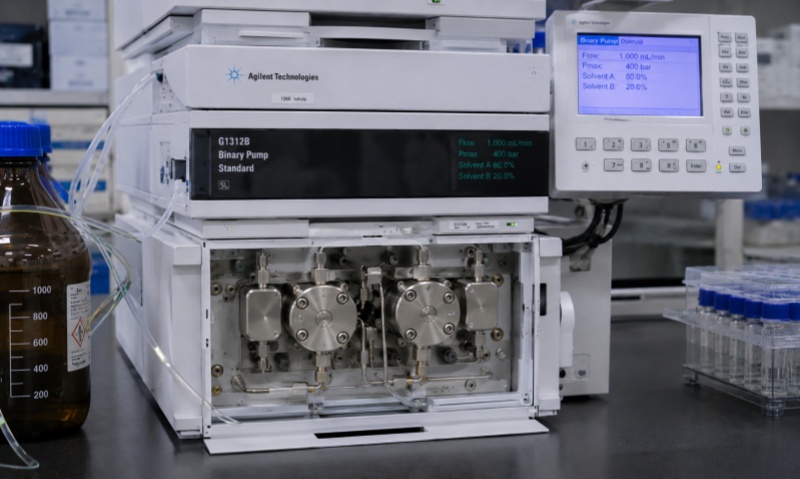
The infusion pump is the core power component of high-performance liquid chromatography (HPLC), responsible for delivering stable, continuous and precise mobile phase flow throughout the analytical process. The operational stability of the pump directly affects retention time consistency, peak shape symmetry, baseline stability and experimental repeatability. Most common HPLC faults such as flow fluctuation, pressure surge, leakage and baseline noise originate from irregular pump operation and inadequate daily maintenance. To extend service life and ensure accurate analytical results, standardized daily maintenance of the HPLC infusion pump must follow eight key scientific guidelines.
First, always use high-purity and degassed mobile phase. Impure solvents and dissolved air easily produce bubbles inside the pump chamber, causing unstable flow rate, pressure fluctuation and ghost peaks. All mobile phases must be filtered through microporous membranes and fully ultrasonically degassed before use to guarantee smooth liquid delivery.
Second, clean the pump system thoroughly after daily use. Residual buffer salts, organic reagents and sample impurities may crystallize inside the pump head and pipeline, wearing the plunger and sealing rings. Operators should flush the system with pure water first to remove salt residues, then use appropriate organic solvents to clean organic contaminants, avoiding long-term residue corrosion.
Third, avoid dry running of the infusion pump. Running the pump without liquid medium will cause severe friction between the plunger and sealing ring, leading to rapid wear, component deformation and permanent pump damage. Before starting the instrument, operators must ensure sufficient mobile phase and completely exhaust pipeline air.
Fourth, maintain stable system working pressure. Sudden drastic changes in flow rate or pressure will impact the pump core structure. It is necessary to adjust flow rate gradually during startup and shutdown, avoiding instantaneous high pressure that may crack sealing components and cause liquid leakage.
Fifth, regularly replace wearable accessories. Sealing rings, plunger gaskets and filter sieve plates are vulnerable to aging and wear. Long-term use will cause internal and external leakage, flow deviation and pressure instability. Regular inspection and periodic replacement of consumables ensure stable pump operation.
Sixth, prevent solvent incompatibility and cross-contamination. Different mobile phases with poor compatibility will produce precipitation or turbidity inside the pump, blocking pump chambers and pipelines. When replacing different mobile phase systems, intermediate transition solvent must be used for full flushing to avoid chemical reaction and blockage.
Seventh, keep the external environment dry and clean. Dust, moisture and corrosive gas may damage the pump motor and circuit system. Maintain a dry, dust-free laboratory environment, regularly wipe the pump surface and heat dissipation holes to ensure normal heat dissipation and circuit stability.
Eighth, perform regular functional calibration. Long-term operation will cause slight flow deviation and pressure error. Regular calibration of flow rate and system pressure can correct parameter drift, ensure accurate mobile phase delivery and maintain high precision of experimental data.
In conclusion, standardized maintenance of the HPLC infusion pump is the key to stable instrument operation. Strictly following the eight maintenance points can effectively reduce pump failure rate, avoid common problems such as leakage, blockage and flow instability, ensure excellent peak shape and stable retention time, and provide reliable technical guarantee for long-term and high-precision liquid chromatography analysis.