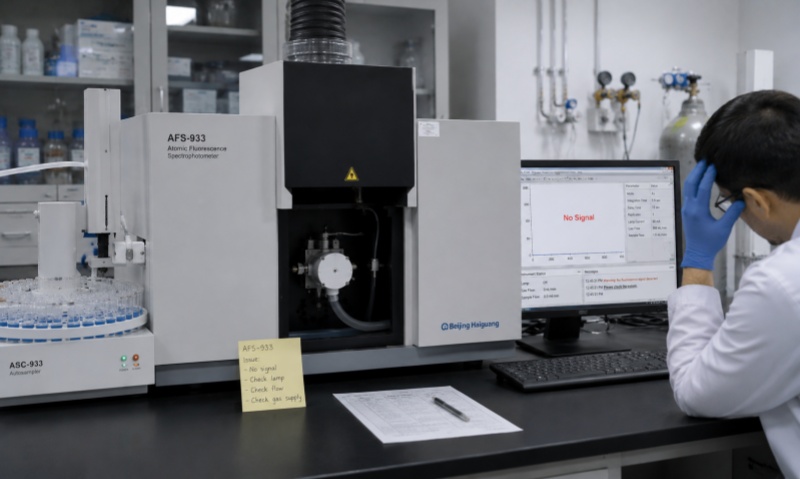
Atomic fluorescence spectrophotometer is a high-sensitivity analytical instrument widely used for the detection of trace heavy metals such as arsenic, mercury and selenium in environmental water, food and soil samples. In long-term laboratory operation, frequent abnormal faults often occur due to non-standard operation, component aging, reagent failure and environmental interference, which reduce detection accuracy and experimental repeatability. Mastering common fault treatment methods and scientific operation optimization strategies is crucial to maintain stable instrument performance and ensure reliable test data.
Baseline instability and excessive noise are the most frequent faults in daily detection. This problem is mainly caused by polluted optical lenses, damp atomizers, impure argon gas or expired reducing reagents. Contaminated light windows will scatter fluorescence signals, while deteriorated sodium borohydride solution leads to incomplete hydride generation, resulting in fluctuating baseline and high blank values. To solve this fault, operators need to clean optical lenses and atomizer furnace bodies regularly, replace high-purity carrier gas and prepare reducing reagents freshly before each test. Keeping the laboratory environment constant in temperature and humidity can also effectively suppress baseline drift and noise interference.
Insufficient detection sensitivity and low fluorescence signal are typical invisible faults. The main causes include aging hollow cathode lamps, loose lamp base contact, blocked peristaltic pump tubes and incomplete sample pretreatment. Aging lamps output unstable light energy, while worn pump tubes cause uneven sample feeding and insufficient hydride reaction. The targeted solutions are replacing aging hollow cathode lamps regularly, cleaning lamp seat contacts, updating loose or deformed pump tubes, and performing strict sample digestion and desalting treatment to eliminate matrix interference.
Failed ignition and unstable atomization flame severely interrupt experimental progress. Oxidized ignition wires, unbalanced carrier gas flow and blocked waste liquid pipelines are the core inducements. Damaged ignition wires fail to generate ignition sparks, and unsmooth waste liquid drainage disrupts gas-liquid balance, causing flame extinguishment. Operators should inspect and replace oxidized ignition wires, calibrate argon flow parameters, and dredge internal pipelines to guarantee smooth gas and liquid circulation.
To further improve detection quality, targeted operation optimization measures are essential. First, standardize reagent preparation and sample pretreatment to avoid salt interference and component loss. Second, implement regular maintenance, including daily pipeline flushing, weekly optical system cleaning and monthly instrument calibration. Third, avoid frequent startup and shutdown of the hollow cathode lamp to reduce light source attenuation. Stable operating environment and standardized operating procedures can greatly reduce instrument failure rate and improve data accuracy.
In conclusion, most faults of atomic fluorescence spectrophotometer are caused by non-standard operation, insufficient maintenance and reagent failure. Timely troubleshooting, standardized maintenance and scientific operation optimization can effectively stabilize instrument performance, ensure high sensitivity and good repeatability of trace heavy metal detection, and provide accurate data support for laboratory testing and scientific research.