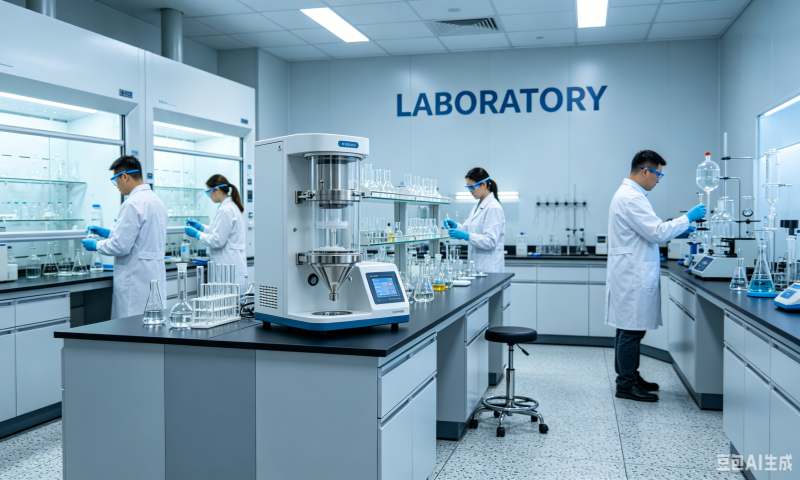
Laboratory spray dryers are efficient continuous drying equipment widely used in food science, pharmaceutical research, chemical material development, and biological laboratory pretreatment. Different from traditional drying methods such as oven drying and freeze drying, spray drying can instantly convert liquid materials including solutions, suspensions and emulsions into uniform dry powder through high-speed atomization and hot air drying. This equipment features fast drying speed, low material damage, good powder uniformity and simple operation, which effectively maintains the physical and chemical properties of heat-sensitive samples such as proteins, plant extracts and probiotics. Understanding the core functions and mastering standardized maintenance and repair methods is essential to ensure experimental stability and extend equipment service life.
The core function of a laboratory spray dryer is rapid low-temperature drying and powder forming. During operation, the liquid sample is pumped into the atomizer and dispersed into tiny mist droplets, which greatly increases the contact area between the sample and hot air. The moisture evaporates instantly in the drying chamber, and the dry powder is separated and collected through the cyclone separator, while waste gas and water vapor are discharged through the exhaust system. This technology realizes one-step processing from liquid to powder, effectively avoiding sample deterioration, component loss and particle agglomeration caused by long-time high-temperature drying. It is especially suitable for preparing microcapsule powder, functional food powder, drug intermediate powder and natural extract dry samples in scientific research.
In daily operation, spray dryers are prone to common faults such as poor atomization, low powder yield, system blockage and abnormal temperature fluctuation due to sample viscosity differences and residual material accumulation. Poor atomization is the most frequent problem, mainly caused by blocked nozzle holes, unstable peristaltic pump flow and contaminated atomizer. When atomization fails, the liquid sample cannot form uniform mist, resulting in large particle droplets, wall adhesion and difficulty in powder formation. To solve this problem, operators should disassemble and clean the nozzle and atomizer regularly, remove crystallized residues and particulate impurities, and calibrate the pump speed to ensure stable and uniform liquid feeding.
Low powder collection rate and cyclone blockage are typical operational faults. Viscous or high-concentration samples are easy to adhere to the inner wall of the drying chamber and cyclone separator, resulting in reduced powder recovery and secondary contamination. The effective solution is to clean the drying chamber wall, air duct and collection tank immediately after each experiment. For heat-sensitive and sticky samples, appropriate dilution and optimized inlet temperature parameters can reduce wall adhesion. In case of severe blockage, disassemble the airflow pipeline for thorough cleaning to ensure smooth air circulation and stable powder separation efficiency.
Temperature control failure and unstable air volume also affect drying quality. Abnormal heating system operation, damaged temperature sensors or dust-covered heating components will lead to inaccurate temperature control, causing insufficient drying or sample scorching. Operators should regularly check the heating module and calibrate the temperature sensor to ensure accurate real-time temperature feedback. Meanwhile, check the fan operating status and air duct tightness to avoid air leakage and insufficient air volume, which may reduce drying efficiency.
Standard daily maintenance is the key to stable long-term operation. After each use, all contact parts including nozzle, drying chamber, cyclone separator and sample pipeline must be cleaned with pure water or mild neutral reagent to prevent sample residue from drying and forming stubborn dirt. Regularly check the aging degree of peristaltic pump tubes and replace worn tubes in time to avoid unstable liquid delivery. Keep the equipment shell dry and the internal ventilation system unobstructed, and regularly inspect circuit and gas path connections to prevent loose wiring and air leakage.
In conclusion, laboratory spray dryers play an irreplaceable role in rapid sample drying and powder preparation. Scientific fault troubleshooting and standardized daily maintenance can effectively reduce equipment failure rates, improve experimental repeatability, ensure consistent powder quality, and provide reliable technical support for laboratory material research and sample pretreatment work.