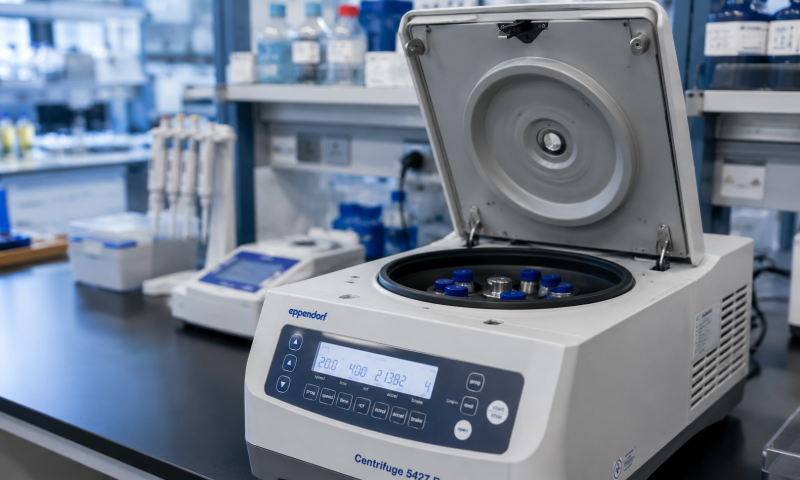
High-speed refrigerated centrifuges are essential precision laboratory instruments, widely adopted in biochemistry, molecular biology, pharmaceutical research, food testing and environmental analysis. They rely on high-speed mechanical rotation and stable low-temperature refrigeration to separate cells, proteins, microbial sediments and trace organic substances. Due to long-term high-load operation, frequent start-stop cycles and complex sample residue accumulation, these devices are prone to various mechanical, refrigeration and control system faults. Minor failures may lead to unstable experimental results, while severe faults may cause equipment damage and laboratory safety risks. This article summarizes the most common faults of high-speed refrigerated centrifuges, analyzes their root causes and provides practical and standardized troubleshooting solutions.
Excessive vibration and abnormal noise during operation are the most frequent faults in daily use. In most cases, these problems result from unbalanced load placement. Many laboratory operators place sample tubes asymmetrically or use tubes with inconsistent liquid volume, causing severe rotational eccentricity at high speeds. In addition, residual impurities in rotor grooves, deformed or corroded rotors, and unlevel instrument placement will also trigger continuous vibration and regular friction noise. To solve this problem, researchers must strictly follow symmetrical loading principles to ensure equal weight and liquid height of opposite sample tubes. It is necessary to clean rotor gaps regularly to remove residual sample sediments and replace damaged or rusted rotors timely. Adjust the foot pads to keep the instrument horizontal to eliminate mechanical jitter during operation.
Failure of refrigeration and slow temperature drop is another typical fault of refrigerated centrifuges. Long-term operation leads to dust accumulation on the condenser surface, which reduces heat dissipation efficiency and causes slow cooling or failure to reach the preset low temperature. Aging sealing strips of the centrifugal chamber will cause cold air leakage and external hot air infiltration, resulting in unstable internal temperature. Besides, aging temperature sensors and refrigerant leakage will also lead to inaccurate temperature control. The effective solutions include regular dust cleaning of the condenser to guarantee unobstructed heat dissipation, replacing aging sealing rubber strips to enhance chamber tightness, and calibrating temperature sensors regularly. If the refrigeration system is weak or the temperature cannot be lowered normally, professional inspection for refrigerant leakage and supplementation is required.
Failure to start and automatic shutdown protection frequently occurs due to safety system triggering. Loose power connections, unstable voltage and damaged power cords will cause power failure. The most common cause is abnormal door lock induction; dust accumulation or displacement of the door lock sensor will mislead the system and activate safety interlock protection, preventing startup. Moreover, overheating protection and overload protection will lead to sudden shutdown during operation. The troubleshooting steps are to check and fix power supply faults, clean and reset the door lock sensor, and ensure the centrifugal chamber door is completely closed. Avoid overloading samples and continuous long-time high-speed operation to prevent overheating protection.
Speed instability and failure to reach the set speed greatly affect sample separation effect. This fault is mainly caused by worn motor carbon brushes, loose motor bearings and dirty speed sensors. Worn carbon brushes lead to unstable power output, while contaminated sensors cannot feed back accurate speed signals, resulting in slow speed rise and speed fluctuation. Maintenance measures include replacing aged carbon brushes, cleaning speed probe dust, lubricating bearings regularly and calibrating the speed control system to ensure stable operation.
In conclusion, most faults of high-speed refrigerated centrifuges are caused by irregular operation, untimely maintenance and aging consumables. Standardized sample placement, regular cleaning, periodic calibration and correct startup and shutdown procedures can effectively reduce failure rates. Timely troubleshooting and scientific maintenance can ensure stable instrument operation, accurate experimental data and long service life of laboratory equipment.