
Consultation Hotline
+1 (302) 618-8777
+1 (302) 618-8777
Current location:Home > Blogs > Industry News
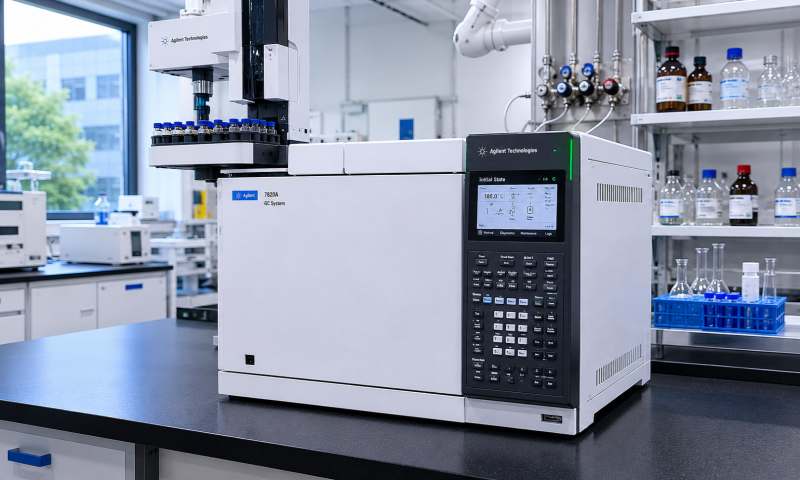
MILFORD, Massachusetts, September 2026 — A new chapter in spectral flow cytometry is beginning with the global commercial launch of the BD FACSDiscover™ A7 Cell Analyzer. Announced by Waters Corporation on September 14, 2026, the new system is designed to address one of the industry's longstanding challenges: achieving more consistent and reproducible flow cytometry results across instruments, users, laboratories, and experimental time points.
The launch comes as high-parameter flow cytometry becomes increasingly important in immunology, oncology, drug discovery, biomarker research, and other areas of biomedical science. As researchers measure more cellular characteristics simultaneously, the complexity of instrument configuration, panel design, calibration, compensation or spectral unmixing, and data interpretation also increases. The A7 is positioned as a response to this growing need for standardized workflows and comparable data.
Flow cytometry has evolved rapidly from relatively simple multiparameter measurements to highly sophisticated spectral platforms capable of analyzing dozens of cellular characteristics in a single experiment. However, increasing parameter numbers can make reproducibility more difficult.
Differences between instruments, detector settings, operators, laboratories, and calibration procedures can introduce technical variation. These differences become particularly important when studies involve multiple sites, longitudinal experiments, large research programs, or the comparison of datasets generated at different times.
The BD FACSDiscover A7 is designed around this standardization challenge. According to Waters, the system combines BD SpectralFX™ Technology with FACSTruQ™ Technology to support consistent spectral performance and data comparability. Waters reports that the platform achieved a coefficient of variation below 10% across a palette of more than 50 dyes in its cited internal comparison and evaluation data.
The company describes FACSTruQ as a next-generation setup, quality-control, and automated calibration technology intended to reduce variation associated with instrument configuration and operation.
At the heart of the A7 is BD SpectralFX Technology, which combines full-spectrum optical detection, optimized hardware, and system-aware unmixing algorithms.
Rather than relying only on individual fluorescence channels, spectral flow cytometry captures broader fluorescence signatures. This approach can provide researchers with additional information for distinguishing fluorophores and resolving complex cell populations.
The A7 is designed to support routine experiments involving more than 50 parameters. Waters says the technology allows researchers to expand panels while maintaining high-quality spectral data, potentially making high-parameter experiments more accessible to laboratories that previously faced greater technical complexity.
The technology is related to the spectral capabilities used in the BD FACSDiscover A8 platform, which supports up to five lasers and 78 fluorescence detectors. The A7 brings this broader spectral technology into a system positioned for standardized, streamlined analysis.
One of the most notable elements of the A7 is FACSTruQ Technology.
Traditional flow cytometry workflows can require experienced users to make careful decisions regarding instrument settings and quality control. While expert knowledge remains important, automation and standardized instrument configuration can reduce the extent to which individual setup differences influence experimental results.
The A7 introduces Detector Setting Independent (DSI) scaling, which Waters describes as a technology designed to improve consistency when detector settings change. According to the manufacturer, DSI scaling is intended to enable consistent intra- and inter-instrument data scaling while retaining flexibility in instrument operation.
This approach could be particularly relevant for multicenter research, core facilities, pharmaceutical development programs, and longitudinal studies in which samples may be analyzed on different instruments or at different locations.
Waters has also presented data involving 12 A7 instruments, matched samples, and high-parameter panels as evidence supporting instrument-to-instrument reproducibility. These are manufacturer-generated performance data and should be interpreted in the context of the specific experimental conditions and validation methods used.
Standardization is not limited to optical performance. Sample handling, instrument setup, quality control, and data acquisition can all influence workflow consistency.
The A7 integrates an autoloader with BD FACSChorus™ Software, providing guided workflows designed to simplify operation. The integrated automation is intended to reduce hands-on steps and help laboratories process samples more efficiently.
According to Waters, the system supports automated sample loading, temperature control, mixing, low sample carryover, and automated shutdown. The software also incorporates guided workflow functions designed to help users become familiar with the system more quickly.
For laboratories operating shared core facilities, these features could be particularly relevant because instruments may be used by researchers with different levels of flow cytometry experience.
The pharmaceutical industry is increasingly dependent on high-dimensional cellular analysis for areas such as immuno-oncology, immune profiling, biomarker discovery, drug mechanism studies, and translational research.
In these applications, reproducibility is not simply a matter of instrument convenience. Consistent acquisition and analysis can be important when researchers compare samples across experiments, research groups, development stages, or geographic locations.
The A7 is therefore being introduced at a time when the flow cytometry market is moving toward higher parameter counts and increasingly standardized workflows.
Waters says the A7 is intended for academic laboratories, pharmaceutical organizations, and contract research organizations. The system is now commercially available globally through local representatives.
The broader significance of the A7 launch may extend beyond the hardware itself.
As flow cytometry datasets become larger and more complex, researchers increasingly need to compare data generated across different experiments and instruments. Standardized acquisition can help establish a more consistent foundation for downstream analysis.
This trend is also reflected in the broader development of computational approaches for cytometry. Recent research has highlighted the challenges created by heterogeneous cytometry datasets and the importance of standardized representations for transferring analytical methods between studies.
In this context, instrument-level standardization, software-guided workflows, and computational analysis can be viewed as interconnected parts of a broader effort to improve reproducibility.
The global launch of the BD FACSDiscover A7 represents another step in the industry's transition toward high-parameter spectral flow cytometry with greater emphasis on reproducibility.
Its combination of spectral detection, automated calibration and quality control, DSI scaling, guided software workflows, and automated sample handling is intended to reduce variability while making advanced flow cytometry easier to deploy across laboratories.
The technology does not eliminate the need for appropriate experimental design, panel optimization, controls, biological validation, or experienced scientific interpretation. Instead, its stated objective is to make the instrument and workflow itself a more consistent foundation for those activities.
As flow cytometry continues to move toward increasingly high-dimensional experiments, the ability to generate comparable data across users, instruments, sites, and time may become increasingly important. The commercial arrival of the BD FACSDiscover A7 therefore highlights a broader industry trend: the next stage of flow cytometry may depend not only on measuring more parameters, but also on making those measurements more reproducible and comparable.
The BD FACSDiscover A7 is now globally available for commercial ordering, marking the latest expansion of the FACSDiscover platform and another step toward a more standardized approach to spectral flow cytometry.
Note: The BD FACSDiscover A7 is intended for Research Use Only and is not intended for use in diagnostic or therapeutic procedures. Product specifications and performance claims should be evaluated against official documentation and application-specific validation requirements.