
Consultation Hotline
+1 (302) 618-8777
+1 (302) 618-8777
Current location:Home > Blogs > Industry News
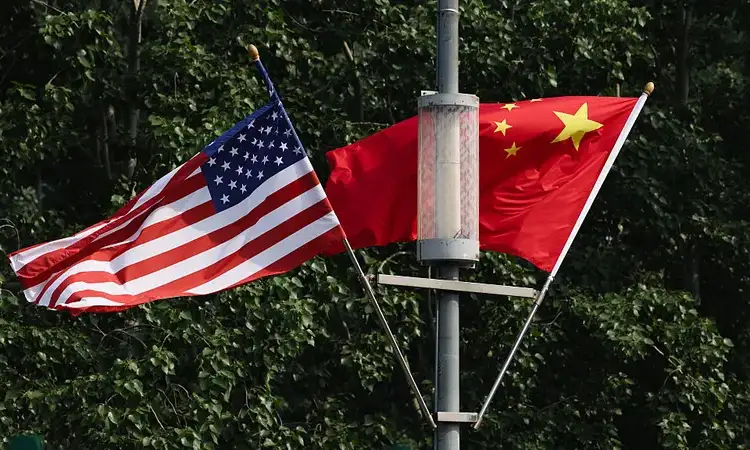
August 16, 2026 — The artificial intelligence competition between the United States and China is entering a new phase, moving beyond a simple race for larger models and faster chips. Increasingly, the contest is defined by two different strategic approaches: the United States is emphasizing targeted controls around critical technologies and global AI supply chains, while China is accelerating domestic innovation, open AI ecosystems, cost-efficient models and large-scale commercial deployment.
The result is not a straightforward race in which one country wins and the other loses. Instead, the global AI industry is developing along increasingly differentiated technological and industrial pathways.
The United States continues to view advanced AI as a strategic technology with significant economic and national-security implications. Advanced semiconductors, AI computing infrastructure, semiconductor manufacturing equipment, capital and critical supply chains have therefore become important points of policy attention.
In April 2026, U.S. congressional intelligence and foreign-affairs leaders publicly argued that export controls on semiconductor manufacturing equipment and AI chips had strengthened America's position in the AI competition.
Washington is also increasingly focusing on the international dimension of AI. In March, the U.S. Department of Commerce announced a new phase of its American AI Exports Program, designed to encourage U.S. companies and industry consortia to export full-stack AI technology packages to international markets. The initiative reflects a broader strategy: protecting critical technologies while expanding the global reach of American AI platforms.
More recently, the United States has reportedly encouraged partner countries to align themselves more closely with American AI infrastructure and supply-chain initiatives rather than simultaneously participating in competing Chinese frameworks. This indicates that AI competition is expanding from individual technologies to ecosystems, standards, infrastructure and international partnerships.
The underlying logic is relatively precise. Rather than attempting to restrict every aspect of China's technology sector, U.S. policy increasingly concentrates on technological chokepoints that could have an outsized effect on advanced AI development.
China's response has been fundamentally different. Restrictions on advanced computing hardware have increased the strategic importance of domestic alternatives, encouraging Chinese companies and research institutions to develop their own chips, computing systems and AI architectures.
The challenge remains substantial. China continues to face limitations in leading-edge semiconductor manufacturing and access to the most advanced AI processors. However, those constraints have also encouraged Chinese developers to pursue alternative approaches emphasizing algorithmic efficiency, model optimization, domestic hardware compatibility and open-weight systems.
Recent developments involving Chinese AI companies demonstrate the speed of this adjustment. Companies such as Moonshot AI, DeepSeek, Alibaba and others have continued to develop increasingly competitive AI models. Analysts have noted that China's progress is particularly visible in cost-efficient models and large-scale domestic deployment.
China's semiconductor strategy is also becoming increasingly ambitious. Recent reporting indicates that Beijing is mobilizing major companies and research institutions to accelerate the development of domestic AI processors and reduce dependence on foreign technology. Huawei has emerged as one of the most prominent participants in this effort.
This represents a classic case of strategic substitution: when access to one technological pathway becomes restricted, investment and innovation move toward alternative pathways.
The most important consequence of the U.S.-China rivalry may be the changing structure of AI innovation itself.
For years, the dominant assumption was that AI progress depended primarily on access to enormous amounts of computing power and increasingly sophisticated processors. That relationship remains important, but the development of more efficient models is changing the equation.
Chinese AI developers have increasingly focused on reducing the amount of computing required to achieve competitive performance. Open-weight models, model distillation, specialized architectures and optimized inference are becoming important competitive tools.
Research published in 2026 argues that U.S. technology restrictions may have unintentionally accelerated China's development of open AI ecosystems. According to the study, Chinese developers increased their engagement with open-source AI infrastructure as geopolitical restrictions increased, making openness and local adaptability strategically valuable.
This does not mean that export controls are ineffective. Rather, it suggests that their effects are more complicated than simply slowing technological development.
Restrictions can increase the cost of accessing advanced technologies while simultaneously creating incentives for domestic innovation.
The competition is increasingly creating two partially differentiated technology ecosystems.
The U.S. ecosystem maintains significant advantages in frontier AI models, advanced semiconductor technology, capital markets, cloud infrastructure and global technology companies. China, meanwhile, is developing strengths in cost-efficient AI, industrial deployment, domestic hardware integration and open-weight models.
A recent analysis by Boston Consulting Group described the emerging situation as a growing divide between U.S. and Chinese technology stacks. It found that the United States continues to lead in frontier models, talent and capital deployment, while China is advancing rapidly in cost optimization and economy-wide adoption.
For multinational companies, this creates a new strategic challenge.
Businesses may increasingly have to decide which AI infrastructure, cloud ecosystem, semiconductor supply chain and model family they want to build around. Countries that previously attempted to maintain technological neutrality could face greater pressure to choose compatible standards and supply chains.
The result could be an AI industry that is more geographically fragmented than the internet economy of the previous decade.
The central paradox of the current competition is that restrictions designed to preserve technological advantages can also stimulate technological adaptation.
From the U.S. perspective, precision controls are intended to slow access to the most strategically sensitive technologies while protecting American leadership and allowing U.S. companies to compete globally.
From China's perspective, restrictions create incentives to accelerate technological independence, diversify supply chains and develop alternative AI architectures.
This creates what can be described as “precision control versus strategic breakthrough.”
The United States is attempting to control key bottlenecks.
China is attempting to bypass those bottlenecks.
The competition therefore increasingly depends not only on who possesses the best technology today, but also on who can adapt faster when the technological environment changes.
For AI companies around the world, the consequences extend far beyond Washington and Beijing.
Hardware manufacturers must consider export regulations and supply-chain security. Cloud providers must evaluate where computing infrastructure can legally and economically operate. AI developers must consider model access, data governance and intellectual-property issues. International customers must increasingly evaluate whether an AI system is compatible with their preferred technology ecosystem.
At the same time, the global market remains too interconnected for complete separation to occur easily.
AI requires an enormous network of chips, advanced packaging, semiconductor equipment, electricity, data centers, cloud services, software and critical minerals. Recent research emphasizes that several upstream components of the AI supply chain are highly concentrated, making these chokepoints strategically important.
This means that neither country can completely ignore the other side's technological development.
The U.S.-China AI competition is therefore entering a more sophisticated stage.
The United States is seeking to protect its technological lead through targeted controls, domestic investment and international AI alliances. China is responding through domestic substitution, open innovation, model efficiency and large-scale deployment.
Neither strategy guarantees victory.
The United States must balance security restrictions with the need to maintain commercial innovation and global market access. China must overcome continuing semiconductor and computing constraints while ensuring that stronger domestic regulation does not discourage private-sector innovation.
The next stage of the AI race may consequently be determined less by who can build the largest model and more by who can create the most resilient ecosystem.
The central question is no longer simply who has the most powerful AI today.
It is who can continue innovating when access to technology, capital, computing power and global markets becomes increasingly contested.
As the U.S. and China pursue different paths, the global AI industry is likely to become more competitive, more fragmented and more strategically important. The era of unrestricted technological convergence may be giving way to an era of precision controls, strategic substitution and increasingly distinct AI ecosystems.