
Consultation Hotline
+1 (302) 618-8777
+1 (302) 618-8777
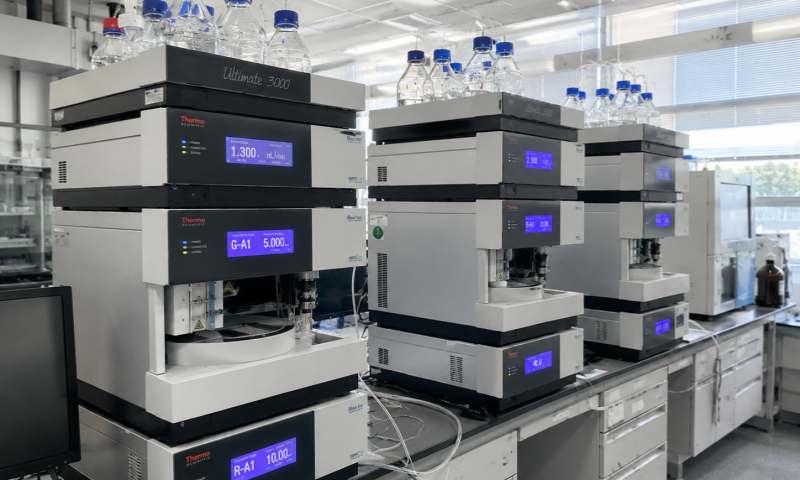
Capillary gas chromatography (GC) columns are essential components of modern GC and GC-MS systems. Their performance directly affects retention time, peak shape, sensitivity, baseline stability, and separation efficiency. Before a new capillary column is used for routine analysis, or after certain maintenance operations, column conditioning—often referred to as column aging or column bake-out—is usually required. Proper conditioning removes volatile contaminants and residual substances from the stationary phase while stabilizing the baseline. Improper aging, however, can shorten column life or damage the stationary phase.
New capillary columns may contain small amounts of residual solvents, manufacturing residues, or volatile compounds. During installation, the column may also introduce contamination from handling or cutting.
When the column is heated under a controlled carrier-gas flow, these volatile substances gradually leave the stationary phase and are carried toward the detector or vent. Proper conditioning can reduce background signals and improve baseline stability.
Column conditioning is particularly important for GC-MS applications because excessive column bleed or contamination can increase background noise and interfere with mass-spectral analysis.
Before starting the procedure, carefully check the column manufacturer's specifications.
Important information includes the stationary phase, column dimensions, maximum operating temperature, recommended conditioning temperature, and maximum isothermal temperature.
The conditioning temperature must never exceed the manufacturer's specified limit. Different stationary phases have different thermal stability. Operating a column above its recommended temperature can cause excessive stationary-phase degradation and significantly increase column bleed.
For a new column, the manufacturer's instructions should take priority over general conditioning practices.
Before conditioning, install the column correctly in the GC oven.
The column should be cut cleanly and inserted into the injector and detector or transfer-line connections according to the instrument manufacturer's recommended insertion depth.
Avoid excessive bending or sharply folding the capillary column. The column should have an appropriate bend radius to prevent mechanical damage.
After installation, check all fittings for leaks. A small leak can introduce oxygen into the column at elevated temperature and cause rapid degradation of the stationary phase.
Carrier gas should be flowing through the column before heating begins.
The appropriate carrier gas depends on the GC method and instrument configuration. Helium and hydrogen are commonly used as carrier gases, while nitrogen may be used for certain applications.
The carrier gas must be sufficiently pure and properly regulated. Moisture, oxygen, hydrocarbons, and other contaminants can adversely affect column performance.
Never heat an unprotected capillary column to high temperature without an appropriate carrier-gas flow.
A typical conditioning process begins with a relatively low oven temperature. The column is first allowed to equilibrate under carrier-gas flow.
The oven temperature can then be increased gradually toward the manufacturer's recommended conditioning temperature. A controlled temperature ramp is preferable to an unnecessarily rapid temperature increase.
Once the recommended conditioning temperature is reached, maintain it for an appropriate period until the baseline becomes stable. The required time depends on column dimensions, stationary phase, contamination level, and manufacturer recommendations.
For many routine applications, excessive conditioning time provides little benefit and may accelerate stationary-phase degradation.
During conditioning, monitor the detector signal or GC-MS background.
A temporary increase in baseline signal is normal because volatile contaminants and stationary-phase components are being released.
However, a continuously increasing baseline or excessive background may indicate excessive temperature, oxygen contamination, a leak, or a damaged stationary phase.
For GC-MS systems, monitor the background spectrum as well as the chromatographic baseline. If abnormal background ions remain after sufficient conditioning, inspect the column installation and gas system.
Used columns may require conditioning after analyzing samples containing high-boiling compounds, oils, plasticizers, or other difficult-to-remove contaminants.
Before conditioning a heavily contaminated column, consider whether trimming a short section from the inlet end would be more appropriate. Contamination is often concentrated near the column inlet.
After trimming, reinstall the column and perform controlled conditioning according to the manufacturer's specifications.
If column performance remains poor after conditioning and trimming, the stationary phase may have suffered irreversible damage, and column replacement may be more practical than continued aging.
One common mistake is setting the oven temperature too high in an attempt to shorten conditioning time. This can accelerate stationary-phase degradation and increase column bleed.
Another mistake is conditioning without adequate carrier-gas flow. Oxygen exposure at elevated temperature can seriously damage many stationary phases.
Leakage is another important problem. Even a small leak at the injector or detector connection can introduce oxygen and moisture into the system.
It is also unnecessary to repeatedly condition a healthy column for long periods. Excessive thermal exposure can gradually reduce column lifetime.
Reconditioning may be considered when baseline stability deteriorates, background increases, or contamination causes abnormal chromatographic behavior.
However, conditioning is not a universal solution. Poor peak shape, significant loss of resolution, severe tailing, unstable retention times, or persistent high bleed may indicate permanent column damage, injector contamination, leaks, or other GC system problems.
The entire analytical system should therefore be evaluated before concluding that the column itself has failed.
Proper conditioning is an important part of capillary GC column installation and maintenance. The basic principle is to establish clean carrier-gas flow, gradually increase the temperature within the manufacturer's limits, monitor baseline behavior, and allow the column to stabilize before analytical use.
The exact conditioning procedure should always follow the column manufacturer's specifications rather than relying on a universal temperature or time. Careful installation, leak prevention, high-purity carrier gas, controlled heating, and regular monitoring can improve column performance, reduce background interference, and extend the useful service life of capillary GC columns.