
Consultation Hotline
+1 (302) 618-8777
+1 (302) 618-8777
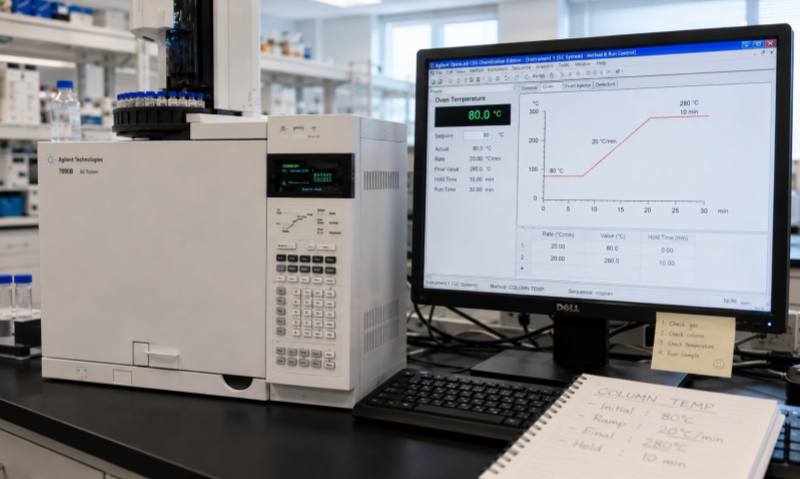
Two-stage rotary vane vacuum pumps are widely used in pharmaceutical laboratories, chemical laboratories, vacuum drying systems, rotary evaporators, vacuum filtration, freeze-drying equipment, and analytical instruments. Because these pumps contain multiple precision components, including the motor, rotor, vanes, pump chambers, oil circuit, exhaust valve, seals, and bearings, a fault should be carefully diagnosed before disassembly. Correct pre-repair diagnosis can reduce unnecessary disassembly, shorten maintenance time, and help identify the actual cause of failure.
The first step is to determine whether the vacuum pump can start normally. If the motor does not respond after the power switch is turned on, check the power supply, power switch, fuse, circuit breaker, wiring terminals, and motor protection device.
If the motor produces a humming sound but cannot rotate, possible causes include insufficient power supply, a damaged starting capacitor, excessive mechanical resistance, or a seized pump mechanism. The pump should not be operated continuously under this condition because the motor may overheat.
If the motor starts but immediately trips the circuit breaker, check whether the pump is mechanically overloaded or whether there is an electrical fault in the motor.
Failure to reach the specified ultimate vacuum is one of the most common problems with rotary vane vacuum pumps.
Before opening the pump, first check the external vacuum system. Inspect the vacuum tubing, connectors, valves, O-rings, flanges, and chamber for air leakage. A leak in the external system can easily be mistaken for a pump failure.
Next, check the vacuum pump oil. Low oil level, contaminated oil, incorrect oil viscosity, or deteriorated oil can significantly reduce pumping performance. If the oil appears dark, cloudy, or contains particles, an oil change may be necessary.
If the vacuum remains poor after confirming that the external system is leak-free and the oil is in good condition, internal wear of the rotary vanes, rotor, or pump chamber should be considered.
Abnormal noise is an important indicator of mechanical problems.
A normal rotary vane vacuum pump should operate with relatively stable sound and vibration. A sudden increase in noise may indicate worn bearings, damaged vanes, foreign particles inside the pump chamber, insufficient lubrication, or mechanical contact between internal components.
Excessive vibration may also be caused by an unbalanced motor, loose mounting bolts, damaged couplings, or improper installation.
Before disassembly, determine whether the noise originates from the motor or the pump body. This simple observation can significantly narrow the troubleshooting range.
Oil leakage around the shaft seal, drain plug, oil tank, or housing should be inspected carefully.
If oil is leaking externally, check the condition of O-rings, gaskets, shaft seals, and drain-plug seals. A damaged shaft seal may require replacement.
If the pump consumes excessive oil but there is no obvious external leakage, oil may be entering the vacuum system through the pump inlet or being discharged through the exhaust system. Possible causes include excessive oil level, unsuitable oil, damaged internal components, or an abnormal exhaust oil-mist separator.
The oil level should always be checked according to the manufacturer's specified range. Overfilling can also cause oil carryover.
A small amount of oil mist may occur during normal operation, but excessive oil mist indicates that the exhaust system or oil separation mechanism may not be functioning properly.
First inspect the exhaust filter or oil-mist separator for blockage. A blocked exhaust filter can increase internal pressure and affect pump performance.
If replacing or cleaning the exhaust filter does not solve the problem, inspect the oil level and oil condition. Excessive oil, incorrect oil viscosity, or internal wear may contribute to oil carryover.
Operating temperature is another important diagnostic indicator.
If the pump becomes unusually hot, check the ambient temperature, ventilation conditions, oil level, oil quality, exhaust resistance, and operating load.
Insufficient lubrication can increase friction between the rotor and vanes, while contaminated oil may reduce heat transfer and lubrication efficiency. A blocked exhaust path can also increase internal pressure and cause overheating.
If the motor itself becomes excessively hot, the problem may be related to electrical overload, bearing damage, insufficient ventilation, or motor winding problems.
If external leakage, oil problems, and system leaks have been eliminated but the pump still cannot achieve the required vacuum, internal wear should be considered.
Worn rotary vanes may increase the internal clearance between the vane, rotor, and pump chamber. This reduces compression efficiency and ultimately lowers the achievable vacuum level.
During inspection, look for scratches, excessive wear, cracks, deformation, or deposits on the vanes and pump chamber. The rotor should also be checked for abnormal wear.
Components should only be replaced according to the manufacturer's specifications because incorrect dimensions or materials can affect pump performance.
The exhaust valve controls the discharge of compressed gas from the pump chamber. If the valve is damaged, contaminated, stuck, or improperly seated, the pump may experience poor compression, abnormal noise, or unstable vacuum.
Sealing components should also be inspected for aging, cracking, deformation, or loss of elasticity. Vacuum equipment is particularly sensitive to small leaks, so even a relatively small sealing problem can significantly affect performance.
Before disassembling a two-stage rotary vane vacuum pump, a systematic diagnostic sequence is recommended:
Power supply → Motor → External vacuum system → Vacuum tubing → Oil level and oil quality → Exhaust system → Noise and vibration → Temperature → Vacuum performance → Internal mechanical components.
This sequence helps prevent unnecessary replacement of expensive components and makes troubleshooting more efficient.
Proper fault diagnosis should always be performed before repairing a two-stage rotary vane vacuum pump. Problems such as insufficient vacuum, abnormal noise, overheating, oil leakage, excessive oil mist, and starting failure can originate from either external system conditions or internal pump components.
In many cases, checking the vacuum lines, valves, seals, oil condition, exhaust filter, and power supply can identify the problem without opening the pump. Only after external causes have been eliminated should the pump be disassembled for inspection of the vanes, rotor, bearings, pump chamber, exhaust valve, and sealing components.
A systematic pre-repair inspection not only improves maintenance efficiency but also helps extend pump service life and maintain stable vacuum performance in pharmaceutical and laboratory applications.