
Consultation Hotline
+1 (302) 618-8777
+1 (302) 618-8777
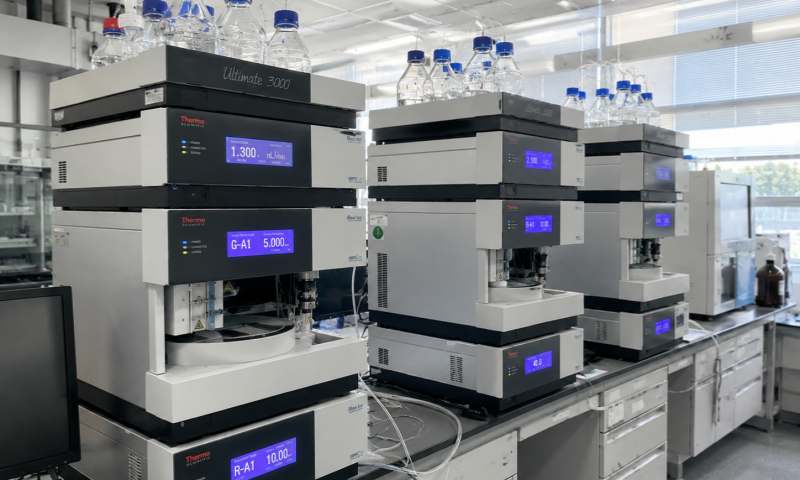
The injection valve (sample valve) in a High Performance Liquid Chromatography (HPLC) system is a critical component responsible for introducing precise sample volumes into the mobile phase stream. Due to its direct contact with multiple samples and mobile phases, it is one of the most common sources of carryover and cross-contamination if not properly maintained. Understanding the cleaning procedures and root causes of contamination is essential for ensuring data accuracy and system reliability.
The injection valve typically consists of a rotary valve with a sample loop, stator, and rotor seal. During operation, the valve alternates between “load” and “inject” positions, allowing sample introduction into the high-pressure flow path.
Because it directly handles all injected samples, any residue accumulation inside the valve can easily lead to sample carryover, ghost peaks, and distorted chromatographic results.
One of the most common causes of cross-contamination is insufficient flushing of the injection pathway.
Mechanism:
After injection, residual analytes remain in the needle, loop, or valve passages. If wash solvents are not strong enough or wash cycles are too short, these residues are carried into subsequent injections.
Symptoms:
Ghost peaks in blank runs
Elevated baseline noise
Reproducibility issues between injections
Certain analytes, especially hydrophobic or high-molecular-weight compounds, tend to strongly adsorb onto stainless steel surfaces or rotor seals.
Mechanism:
These compounds are not fully eluted during normal flow and gradually accumulate inside the valve components.
Result:
Progressive carryover that increases over multiple runs.
The rotor seal and stator are wear parts that degrade over time due to high pressure and chemical exposure.
Symptoms of wear:
Internal leakage
Increased dead volume
Irregular peak shapes
Persistent contamination even after cleaning
Cause:
Mechanical friction combined with aggressive solvents leads to micro-scratches and surface deformation.
Autosamplers rely on external and internal needle wash systems to reduce carryover. Incorrect settings significantly increase contamination risk.
Common issues:
Weak wash solvent selection
Insufficient wash cycles
Blocked wash lines or filters
Impurities in solvents or mobile phases can deposit inside the valve system.
Examples:
Non-filtered buffers
Microbial growth in aqueous phases
Particulates from poor-grade solvents
These impurities accumulate over time and contribute to baseline instability and valve fouling.
Failure to regularly clean or replace valve components leads to gradual buildup of residues.
Typical neglect areas:
Sample loop not flushed
Valve rotor not periodically inspected
Absence of routine preventive maintenance
Proper cleaning of the injection valve is essential for preventing carryover and restoring performance.
Flush system with high-strength organic solvent (e.g., methanol, acetonitrile)
Follow with water or buffer-compatible solvent
Run multiple injection cycles without sample
For persistent contamination:
Use isopropanol or 50:50 water/organic mixtures
Increase flushing time (10–30 minutes)
Include backflush procedures if supported by the system
If contamination persists:
Remove rotor seal and sample loop
Clean with ultrasonic bath using appropriate solvent
Dry completely before reassembly
If cleaning does not resolve contamination:
Replace rotor seal
Replace stator face
Inspect sample loop for blockage or adsorption
To minimize cross-contamination in HPLC systems:
Use high-purity HPLC-grade solvents
Filter all mobile phases (0.22 µm recommended)
Optimize needle wash solvent strength
Implement blank runs between high-concentration samples
Regularly replace valve consumables
Avoid overloading injections
Cross-contamination in HPLC injection valves is primarily caused by incomplete washing, analyte adsorption, wear of sealing components, solvent impurities, and inadequate maintenance practices. Because the injection valve is a central point of sample introduction, even minor contamination can significantly impact analytical accuracy.
A combination of routine flushing, proper solvent selection, timely replacement of wear parts, and strict maintenance protocols is essential to maintain system integrity. By implementing these preventive strategies, laboratories can significantly reduce carryover effects and ensure reliable, reproducible chromatographic results.