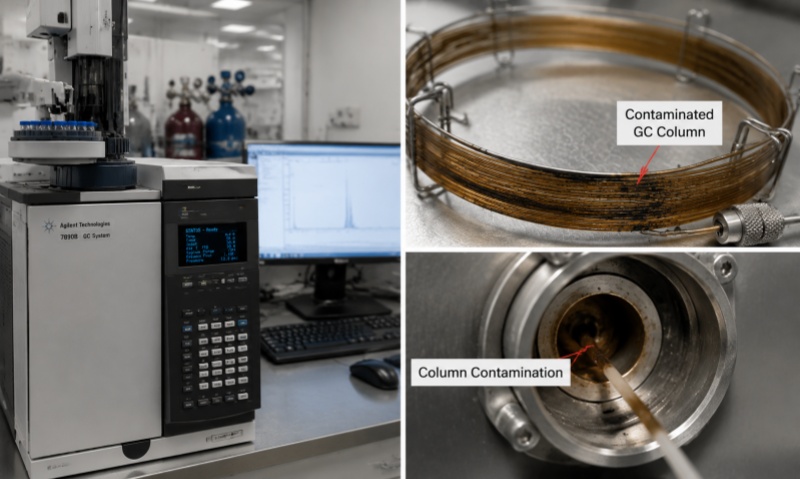
Chromatographic columns serve as the core separation components of high-performance liquid chromatography and gas chromatography systems, directly governing the separation efficiency, peak shape symmetry, resolution and quantitative accuracy of analytical experiments. In long-term laboratory testing, chromatographic columns are inevitably contaminated by residual samples, macromolecular impurities, insoluble particles, organic residues and metal ions. Column pollution is one of the most common causes of experimental abnormalities, including peak tailing, baseline drift, increased noise, reduced column efficiency and prolonged retention time. Severe contamination will lead to irreversible column damage, greatly shortening service life and increasing experimental costs. Therefore, accurate identification of contamination signs and adoption of scientific and standardized disposal methods are essential to maintain stable column performance and ensure reliable experimental data.
To effectively deal with column contamination, laboratories must first clarify common contamination types and characteristic manifestations. Chromatographic column pollution is mainly divided into particulate contamination, strong retention substance contamination, and microbial contamination. Particulate impurities from unfiltered samples or mobile phases easily block the column inlet sieve plate, resulting in increased system pressure and distorted chromatographic peaks. Strong polar substances, pigments, macromolecular proteins and organic residues are prone to irreversible adsorption on the column packing surface, causing peak tailing, ghost peaks and decreased resolution. Microbial contamination often occurs in water-based mobile phase environments, leading to baseline fluctuations and continuous miscellaneous peaks, which seriously interfere with sample detection.
Timely emergency disposal is the first step to control mild column contamination and prevent performance deterioration. Once abnormal chromatographic signals are observed, the experiment should be suspended immediately to avoid continuous injection of contaminated samples that aggravate column damage. First, stop the sample injection and maintain the low-flow flushing state of the mobile phase to wash out weakly retained impurities inside the column. For routine mild pollution caused by conventional sample residues, isocratic flushing with high-purity methanol or acetonitrile at a low flow rate can effectively remove surface adsorbed impurities. It is strictly prohibited to use ultra-high flow rate for rapid flushing, as excessive pressure will cause packing collapse and permanent damage to the chromatographic column.
For moderate and severe contamination with obvious peak distortion and pressure rise, targeted gradient cleaning procedures are required based on column properties and pollution types. For reversed-phase chromatographic columns contaminated by organic residues and pigments, stepwise elution with mixed solvents of different polarities is recommended. Start with low-proportion organic solvent to flush polar impurities, then gradually increase the proportion of methanol or acetonitrile to elute strongly retained organic substances. For columns polluted by protein and biological macromolecules, mixed solution of methanol, water and a small amount of formic acid can be used for slow flushing to denature and strip macromolecular impurities. After cleaning, the column must be re-equilibrated with the conventional mobile phase until the baseline is stable before reuse.
In view of stubborn contamination that cannot be removed by conventional solvent flushing, professional deep cleaning and maintenance measures should be adopted. Users can disassemble and clean the column inlet sieve plate, where most particulate impurities and accumulated pollutants are intercepted. Ultrasonic cleaning with pure methanol can thoroughly remove embedded dirt. For packing surface contamination, specialized column regeneration solvents can be used for circulating cleaning according to the column manual. It is worth noting that acidic or alkaline cleaning solutions must be used within the tolerance range of the chromatographic column to avoid corrosion and damage to the stationary phase. After deep cleaning, test column efficiency and peak shape to verify the recovery of column performance.
Long-term standardized preventive management is the fundamental solution to avoid repeated column contamination. Before sample injection, all samples and mobile phases must be filtered through microporous filters to remove particulate impurities. Degassing treatment should be performed regularly to prevent microbial growth in the mobile phase. Laboratories need to establish a column usage ledger, record sample types, usage frequency and cleaning records, and avoid long-term injection of high-concentration, high-viscosity and easily residual samples. In addition, after daily experiments, the chromatographic column should be cleaned and stored according to standard procedures to prevent residual mobile phase and sample impurities from drying and adhering to form stubborn pollution.
In summary, chromatographic column contamination is unavoidable in daily laboratory analysis, but its impact on experiments and equipment can be minimized through scientific disposal mechanisms. Adopting targeted flushing and cleaning methods for different degrees and types of pollution can effectively restore column separation performance. Combined with standardized pre-treatment, standardized use and daily maintenance, it can significantly reduce the frequency of column contamination, extend the service life of chromatographic columns, reduce experimental costs, and provide stable and accurate technical support for daily qualitative and quantitative analysis experiments.