Consultation Hotline
+1 (302) 618-8777
+1 (302) 618-8777
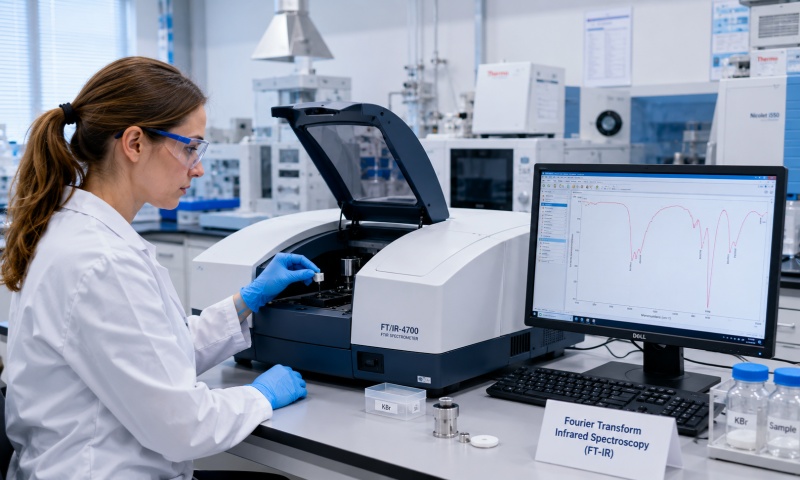
In today’s increasingly regulated and data-driven laboratory environment, analytical technologies are expected to do far more than simply identify chemical compounds. Laboratories must deliver faster turnaround times, maintain regulatory compliance, reduce operational costs, and support sustainability initiatives while ensuring analytical accuracy. Among the many analytical tools available, Fourier Transform Infrared (FTIR) Spectroscopy has evolved from a traditional molecular identification technique into a strategic platform that supports laboratory performance, quality management, and sustainable operations.
From generating molecular fingerprints to powering intelligent analytical workflows, FTIR spectroscopy is helping modern laboratories transform the way they operate.
Every molecule interacts with infrared radiation in a unique way. When infrared light passes through or reflects from a sample, specific chemical bonds absorb characteristic frequencies, creating a distinctive spectral pattern often referred to as a molecular fingerprint.
FTIR spectroscopy measures these absorption patterns with exceptional speed and precision. By comparing spectra against reference libraries, laboratories can identify unknown materials, verify raw materials, detect contamination, and monitor product quality.
Unlike many analytical techniques that require extensive sample preparation, FTIR often provides results within minutes while preserving sample integrity. This combination of speed, simplicity, and reliability has made FTIR an essential technology across pharmaceutical, chemical, environmental, food, forensic, and materials science laboratories.
Laboratory productivity is increasingly measured by throughput, efficiency, and turnaround time. Traditional analytical methods may involve lengthy preparation procedures, solvent consumption, and complex instrument operation.
FTIR addresses these challenges through rapid, non-destructive analysis.
Modern FTIR systems can:
Identify materials in seconds
Analyze solids, liquids, gases, and powders
Reduce sample preparation requirements
Minimize operator intervention
Support high-throughput workflows
Deliver reproducible results across multiple users
For quality control laboratories, this speed translates directly into faster release decisions, reduced production delays, and improved operational efficiency.
Manufacturing facilities can use FTIR for incoming material verification, in-process monitoring, and final product testing, helping ensure consistency throughout the production cycle.
Regulatory expectations continue to grow across pharmaceutical, biotechnology, environmental, and food industries. Laboratories must demonstrate that analytical results are accurate, traceable, and fully documented.
FTIR technology contributes significantly to compliance objectives by supporting:
Regulatory agencies require manufacturers to verify the identity of raw materials before use. FTIR provides a rapid and reliable method for confirming material identity while reducing the risk of counterfeit or mislabeled substances entering production processes.
Modern FTIR platforms support validated analytical methods and standardized operating procedures. Automated workflows help reduce variability between analysts and laboratory locations.
Contemporary FTIR software integrates with Laboratory Information Management Systems (LIMS), Electronic Laboratory Notebooks (ELN), and quality management platforms.
These integrations provide:
Secure audit trails
Electronic signatures
Data traceability
Controlled user access
Automated reporting
Long-term data retention
Such capabilities help laboratories align with regulatory frameworks including FDA 21 CFR Part 11, GMP, GLP, ISO 17025, and other international quality standards.
The pharmaceutical and chemical industries are increasingly adopting Process Analytical Technology (PAT) frameworks to improve manufacturing quality and efficiency.
FTIR spectroscopy plays an important role within PAT strategies because it enables real-time monitoring of chemical processes.
Rather than relying solely on end-product testing, laboratories and manufacturing facilities can use FTIR to:
Monitor reaction progress
Track raw material consumption
Detect impurities
Verify process consistency
Optimize production parameters
Real-time process visibility allows organizations to identify deviations earlier, reduce waste, and improve product quality before problems become costly.
As a result, FTIR is transitioning from a laboratory instrument to a critical component of intelligent manufacturing systems.
Sustainability has become a central focus for laboratories worldwide. Organizations are under increasing pressure to reduce environmental impact while maintaining scientific excellence.
FTIR spectroscopy supports sustainability goals in several important ways.
Many traditional analytical methods require significant volumes of organic solvents. FTIR analysis often requires little or no solvent usage, reducing chemical consumption and hazardous waste generation.
Compared with some advanced analytical platforms, FTIR systems generally consume less energy while delivering rapid results.
Because FTIR is frequently non-destructive, samples can often be retained for additional testing or archival purposes.
Reduced reagent use, lower waste production, and shorter analysis times contribute to a more environmentally responsible laboratory operation.
For organizations pursuing Environmental, Social, and Governance (ESG) objectives, FTIR represents a practical technology investment that aligns scientific performance with sustainability commitments.
The modern analytical laboratory is becoming increasingly interconnected. Artificial intelligence, automation, cloud computing, and advanced data analytics are transforming how laboratories generate and utilize information.
FTIR systems are evolving alongside these digital trends.
New-generation platforms offer:
Automated spectral interpretation
AI-assisted material identification
Cloud-based data storage
Remote monitoring capabilities
Predictive maintenance analytics
Instrument performance dashboards
These capabilities allow laboratories to move beyond simple molecular analysis and toward data-driven decision-making.
Instead of serving solely as an identification tool, FTIR becomes part of a broader laboratory intelligence framework that supports continuous improvement and operational excellence.
As laboratories face increasing demands for efficiency, compliance, and sustainability, FTIR spectroscopy is undergoing a significant transformation.
What was once primarily viewed as a molecular fingerprinting technology is now functioning as a process intelligence engine capable of supporting quality assurance, regulatory compliance, operational efficiency, and environmental responsibility.
Organizations that strategically integrate FTIR into their analytical workflows gain more than analytical data—they gain actionable insights that improve decision-making across the entire laboratory ecosystem.
Fourier Transform Infrared Spectroscopy has evolved far beyond its traditional role in material identification. By combining rapid analysis, regulatory support, process monitoring capabilities, and sustainability advantages, FTIR has become an essential technology for modern analytical laboratories.
From molecular fingerprints to intelligent process control, FTIR empowers laboratories to improve performance, strengthen compliance, reduce environmental impact, and prepare for the increasingly digital future of scientific analysis. As laboratories continue to modernize, FTIR will remain a foundational technology driving innovation, efficiency, and long-term operational success.