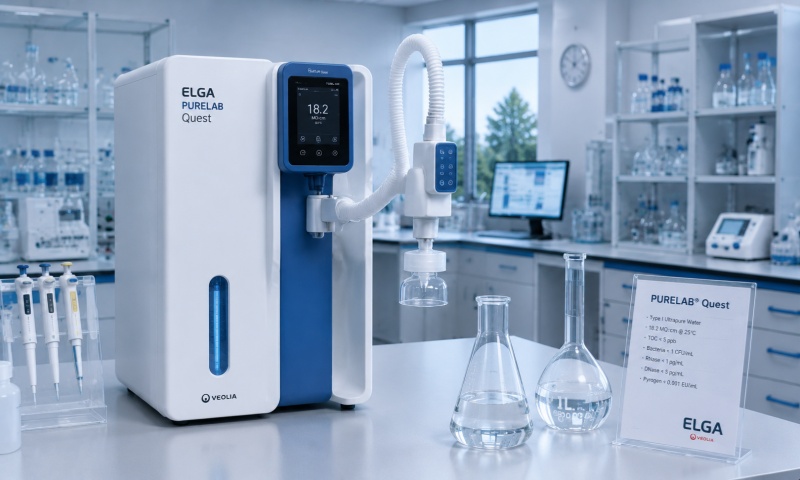
Laboratory ultrapure water systems are indispensable core equipment in modern scientific research, biochemical experiments, pharmaceutical testing, and analytical chemistry laboratories. They purify tap water into high-purity water that meets experimental standards through multi-stage filtration, reverse osmosis, ion exchange, and terminal purification processes. In long-term continuous operation, scaling is one of the most common and easily neglected latent faults of ultrapure water equipment. Water scale formed by the precipitation of calcium, magnesium, carbonate, and silicate impurities will adhere to filter elements, reverse osmosis membranes, water pipelines, and heating components. Slight scaling will reduce water production efficiency and weaken water purification accuracy, while severe scaling will cause pipeline blockage, membrane element damage, system pressure surge, and equipment shutdown, seriously affecting experimental progress and data stability. Therefore, mastering scientific and standardized anti-scaling measures is essential to ensure the long-term stable operation of ultrapure water systems. This paper systematically analyzes the causes of scaling in ultrapure water equipment and summarizes practical and effective anti-scaling operation and maintenance strategies.
The fundamental cause of scaling in ultrapure water systems is the concentration and precipitation of inorganic mineral ions in raw water. Tap water contains a certain amount of calcium ions, magnesium ions, bicarbonates, and silicates. During the water purification process, with the continuous filtration and concentration of raw water, the concentration of mineral ions in the reverse osmosis concentrated water side increases continuously. When the ion concentration exceeds the saturation solubility, insoluble inorganic compounds will precipitate and adhere to the surface of precision components to form hard scale. In addition, unreasonable operation, untimely maintenance, and unsuitable working environment will accelerate the scaling process. For example, long-term continuous operation without flushing, excessive water temperature, and aging of pretreatment filter elements will all aggravate scaling adhesion, resulting in irreversible damage to key equipment components.
Standardizing raw water pretreatment management is the primary measure to prevent system scaling. The pretreatment system of ultrapure water equipment includes multi-media filters, activated carbon filters, and precision cartridge filters, which undertake the task of intercepting large-particle impurities, suspended solids, and partial colloid impurities in raw water. Blockage and failure of pretreatment filters are important inducements for subsequent scaling. Operators need to replace filter cotton and filter elements regularly according to raw water quality and equipment operating load. Under normal tap water quality conditions, precision filter elements should be replaced every one to three months to ensure effective interception of particulate impurities. At the same time, regular backwashing of multi-media and activated carbon filters should be carried out to remove accumulated intercepted impurities, avoid raw water short-circuit filtration caused by filter failure, and reduce the load of ion precipitation in the fine purification stage.
Regular standardized flushing of reverse osmosis membrane is the core link of anti-scaling maintenance. Reverse osmosis membrane is the key component for salt removal, and its concentrated water side is the most prone to scaling. Most laboratory ultrapure water equipment is equipped with automatic flushing programs, but manual supplementary flushing is still required in daily use. After each experiment and daily equipment shutdown, the automatic flushing function should be started to flush the high-concentration mineral solution on the membrane surface out of the system, avoiding long-term retention and crystallization precipitation of concentrated water. For equipment that has been shut down for more than three days, intensive circulating flushing must be performed before reuse to eliminate residual supersaturated solution in the pipeline and membrane shell, which can effectively prevent dry membrane scaling and dead-angle scaling.
Scientific use of anti-scaling agents and reasonable control of operating parameters can further optimize anti-scaling effects. For laboratory ultrapure water systems with poor raw water quality and high hardness, food-grade reverse osmosis special anti-scaling agents can be added quantitatively according to equipment specifications. Anti-scaling agents can wrap mineral ions to inhibit crystal agglomeration and precipitation, and effectively delay membrane surface scaling. Meanwhile, operating parameters such as water inflow pressure and water temperature should be strictly controlled. The optimal operating water temperature of the ultrapure water system is 20℃ to 25℃. Excessively high water temperature will increase the solubility difference of mineral ions and accelerate scaling crystallization. It is necessary to avoid placing the equipment near heating equipment to prevent raw water temperature from rising and inducing scaling.
Daily standardized operation and regular deep maintenance are the fundamental guarantees to avoid recurring scaling faults. Operators should develop good usage habits and avoid long-term no-load operation and over-load water production of the equipment. Long-term no-load operation will lead to static retention of internal water body and gradual precipitation of impurities, while over-load water production will increase the concentration multiple of concentrated water and sharply increase scaling risk. In the daily inspection process, it is necessary to observe the water production flow, inlet and outlet pressure difference, and water quality conductivity data in real time. Once the pressure difference increases abnormally and the water quality deteriorates, it indicates early scaling of the membrane element, and targeted cleaning and maintenance should be carried out in time. In addition, the internal water storage tank and circulating pipeline should be cleaned regularly to remove residual dirt and hidden scaling risks.
In conclusion, scaling of laboratory ultrapure water systems is a progressive fault caused by the combination of raw water impurities, unreasonable operation, and insufficient maintenance. The anti-scaling work needs to adhere to the combination of prevention and maintenance. Through standardized pretreatment management, regular membrane flushing, reasonable parameter control, and scientific daily maintenance, the scaling probability of equipment can be minimized. Effective anti-scaling maintenance can not only ensure the stability of ultrapure water quality and meet the requirements of precision experiments, but also prolong the service life of core components of the equipment, reduce maintenance costs, and ensure the efficient and stable operation of laboratory water supply systems.